Monday, June 21, 2021

Outdoor Magic


Early childhood educators have long known the benefits of outdoor play. To name but a few, outdoor play improves physical and mental health, provides meaningful and magical opportunities to explore and create with others, and presents chances for appropriate and necessary risk-taking. This year, which will always be known as the COVID year, with its many restrictions and surprising bright spots, we've seen for ourselves day in and day out just how much our children have benefitted from spending so much time outside. We've seen the theory play out in practice. If anyone had any lingering doubts that outdoor play was different from indoor play and just as crucial for children's healthy development, this year put those doubts to rest.


Because we were told to be outside as often as possible, we went outside as often as possible. We ate snack and lunch outside. We did art projects outside. We played with legos and magnatiles and blocks outside. We went through tubs of sidewalk chalk and gallons of bubbles.
 We planted and watered and weeded. One class planted bulbs during Sukkot and watched the daffodils bloom during Pesach. Another planted and enjoyed lettuce and cilantro. 
We played with sticks and dirt and rocks and built bridges and forts and habitats for cicadas. We discovered so many spaces around the synagogue building that we had to give them special names. We needed a shared language so we could talk to each other about where we were going. In addition to the sukkah courtyard and amphitheater, classes played in the secret garden, by the climbing tree, in the field, and in the forest.
We also created new spaces. We hope you'll enjoy the Preschool Havdalah Herb Garden near the back parking lot and that you stumble upon the painted tree stumps in the secret garden behind the front parking lot. We worked with parent volunteers to enhance these spaces to make them even more beautiful and intentional. We have another project in mind, and we invite you to help us build it. We're planning on creating a Seven Species Garden in the grassy area to the left of the glass parking lot doors. We hope to build a new raised garden bed in the shape of a Star of David. We want to plant a fig tree and see if we can grow pomegranates. We imagine steppingstones and benches for wandering and resting. Like all the other spaces described so far, this will be another space that everyone in our community will be able to enjoy.


We'll be looking for gardeners and carpenters and anyone with a passion for outdoor learning. Stay tuned for more details and thank you in advance. Have a wonderful summer and see you in September!


Friday, May 14, 2021

Shavuot -- Do we really need all these rules?

We've quite literally been counting down the days until our next holiday, Shavuot, which begins in a few days. Starting on the second night of Passover, we count every day until we reach 50. Since we celebrate receiving the Torah at Mt. Sinai on Shavuot, it makes sense that the holiday is linked to Passover. After leaving Egypt, the Israelites spent seven weeks in the desert before entering into the covenant with God.

Most people know The Ten Commandments, and some assume that they are the foundation of the Jewish moral code. But the Torah actually contains 613 commandments if you count every time God says "Do this" and "Don't do that" to the Jewish people. Some of those 613 are now impossible for us to observe (bringing sacrifices to the Temple) and some probably seem downright ridiculous to many of us now (not wearing clothing made with both linen and wool). But there are many others in those 613 that are, in my opinion, just as important as The Top Ten:
  • We are commanded to pay workers the day they complete their work so as not to take advantage of them: "On his day you should give his wages, the sun should not set on it, because he is a poor man and his life depends on it…"
  • "Do not put a stumbling block before the blind," which can be interpreted to mean that we shouldn't put any kind of barrier in front of anyone on their way to success or happiness
  • "Love your neighbor as yourself."
Children can most definitely relate to Shavuot and its celebration of the Torah, which in so many ways is a how-to book of rights and wrongs. Children thrive when they know what the rules are, when clear boundaries and expectations have been outlined and are enforced. Children feel more secure knowing that there are limits to their behavior, as well as the behavior of others. They feel safer and become more confident as a result. 

A great story to share with your children is No Rules for Michael by Sylvia A. Rouss. Michael thinks school would be more fun without rules, so his teacher (wisely) suggests a day without rules. Quickly Michael becomes frustrated and sad. At the end of the book he says, "No one will listen to me. No one will give me a turn. No one will share. I guess rules are important. Rules show people how to care about each other."

Friday, February 5, 2021

Shabbat Bags and the Family Prayer

"More than the Jewish people have kept Shabbat, Shabbat has kept the Jews." 

-- Ahad Ha'am

Over the past few weeks, our friends have been busy making kiddush cups, candle sticks, challah covers, and/or tzedekah boxes to fill their very own Shabbat Bags. In the past, each class has shared a Shabbat Bag, with a different friend taking the bag home each week. Things are a little different this year. 

Today, every child will go home with the ritual items and a copy of the blessings needed to make Shabbat, and every week we'll send a friend home with a bottle of grape juice, candles, and baby challahs from our neighbors at Great Harvest. We hope you'll take a picture of your family celebrating (or getting ready to celebrate) Shabbat and send them to your child's teacher to share on the class blog. Whatever your family's faith tradition or level of observance, we hope you find this family dinner tradition as meaningful as we do. 

In thinking about what we hope each family will take away from this experience, I could only think of the 'family prayer' we say at my house every Friday night:

We thank You, God, for enabling us to welcome this Shabbat day together.

We are grateful for the happiness of our home and for our caring and loving family.

We are thankful for the blessings of the past week: for life and health, for laughter and friendship; for the opportunity to work, to learn, and to grow.

Where these have been lacking, may the coming week be better.

We pray that the peacefulness of Shabbat will refresh and inspire us so that the week ahead will be one of blessing and accomplishment for each of us(Emphasis added at my house!)

(from Siddur Sim Shalom)

Shabbat Shalom!


a different version originally posted February 17, 2017

Tuesday, December 15, 2020

Three Reasons Why This is One of the Best Years Ever

The 2020-2021 school year, which we approached with a lot of uncertainty and a degree of trepidation, has so far proven to be one of the best years ever. Parents and teachers alike have said numerous times that there's something special about this year. While we truly missed helping the children prepare food to share with their families at our annual Thanksgiving feast, and we've missed gathering as a whole school every week for Shabbat, there have been benefits to this school year that few of us were expecting.
We've slowed down.
Ask any teacher what they wish for most and I guarantee the majority will answer "time." Teachers never have enough time. 

This year, because we're cohorting, the same two teachers stay with the same small group of children all day long. In a more typical year, a child who is in school from 7:30 am to 5:30 pm might engage with ten different teachers and 20 different children in three different classroom spaces. Thanks to cohorting, the classes this year are more cohesive, and there are hours more opportunities every single day for the teachers and children to learn together. There are far fewer transitions during the day which creates a calmer atmosphere and allows everyone the time to really focus on the tasks at hand. Classes eat when they're hungry and nap when they're tired. Routines are more natural. Everyone feels at home.

We play outside all the time.
All. The. Time.

You might find us planting a garden. Or swinging from the "climbing tree." Or exploring the "fairy garden" behind the parking lot or the "field" by the rabbi's house or the "woods" across the street. Classes take walks around the block, even when it's pouring rain, and jump in every puddle they find. They identify letters and numbers on license plates. They wave at firefighters driving down the street. They look for butterflies and bees in our neighbor's natural habitat garden. The go swimming in giant piles of leaves and find bugs in the dirt and poke at funny looking fungi that grow out of tree stumps. All the while their bodies and minds are being challenged by these experiences. They're growing and learning in ways they simply can't inside a building.

These spaces and these opportunities were always there, but it wasn't until we were compelled by necessity to spend more time outside that we realized what we'd been missing out on all along.

Our community has grown stronger.
There is a palpable element of trust and respect between the families and the school this year. The parents are grateful that we've reopened, and the teachers are grateful to be back at work. The children are grateful to be with their friends. We've all taken our commitment to each other's health and safety very seriously. Our communication is open, honest, and frequent. We know how lucky we are because not all schools have re-opened and not all school re-openings have been so successful. We know it is not a cliche to say that we're all in this b'yachad, together. 

Friday, December 4, 2020

The Potential for Light

Everyone knows the story of Chanukah:

The Macabees, a family of Jewish freedom fighters, won a war against Israel's occupiers, the Syrian-Greeks. The Jews reclaimed the Temple in Jerusalem, which had been desecrated. They set out to make it holy again, and so they looked for oil to light the menorah. But they found only enough oil to last one night. Miraculously, the oil lasted for eight days, which is why, to celebrate Chanukah (which means dedication), we light candles and eat food fried in oil for eight nights.

So, we’re commanded to light the candles, but how? Two of the greatest sages of all time, Hillel and Shammai, debated the proper way to light the Chanukah menorah, or chanukiah.

Shammai believed you should begin with the “days remaining,” meaning you start with eight candles. Each night you light one fewer candle. In this way, the light decreases.

Hillel believed you should begin with the “days completed,” meaning you start with one candle and add one each night, thereby increasing the light each day.

Hillel, whose opinion we follow, realized you should celebrate the potential of the commandment and the potential for light. Each night you light candles, you realize not only how many days you’ve celebrated, but how many days you still have to celebrate. The light never diminishes, it only increases, becoming more beautiful each night. As the light grows, so does your joy in the miracle. 

It's important sometimes to take a moment to reflect not just on what's to come, but on what's been achieved. This is especially true when those big life transitions are right around the corner. So, each night before we light the candles this year, we should pause, think about and take joy in our past accomplishments, and then imagine what the future may bring.

Friday, November 13, 2020

Shabbat Blessings -- Our Children

A few weeks ago we started reading the first book of the Torah, Breishit (Genesis). It's in these stories that we meet the patriarchs and matriarchs and learn how the Ancient Israelites ended up in Egypt generations later.

A lot of "blessing" goes on in these stories. Gob blesses Abraham, Isaac blesses Jacob (a blessing Jacob steals from his brother Esau), and Jacob blesses the sons of his son Joseph, Ephraim and Menashe. 

The "priestly blessing," known to many, refers to this blessing of Jacob's. It has become traditional for Jewish mothers and fathers to give their sons and daughters this blessing on Friday evenings, often right after lighting Shabbat candles.

This can be a very meaningful moment for parents and their children. Parents often place their hands on their children's heads while reciting the blessings. In my experience, children, once they become teenagers, pretend to not like this tradition anymore. I think they secretly love it, because they know it's a demonstration of their parents' love for them.

In English, the blessings are:
For boys: May God make you like Ephraim and Menashe.

For girls: May God make you like Sarah, Rebecca, Rachel, and Leah.

For both: May God bless you and keep you. May God's light shine upon you and be gracious to you. May God's face be turned toward you and give you peace.

To learn more, and for the blessings in Hebrew, check out the link below.
Bim Bam (video)

Thursday, October 29, 2020

The Science of Shabbat Dinner

Every now and then I’ll come across a study that seems to confirm the importance or validity of a Jewish tradition. This happened a few years ago when I read about the research promoting the importance of the family dinner and immediately connected it with the Friday night Shabbat meal. In addition to the traditional and spiritual benefits of celebrating Shabbat as a family, there are countless other benefits to simply sitting down together a few times a week to enjoy a meal together.

From The Family Dinner Project (thefamilydinnerproject.org): Over the past 15 years researchers have confirmed what parents have known for a long time: sharing a family meal is good for the spirit, the brain and the health of all family members. Recent studies link regular family dinners with many behaviors that parents pray for: lower rates of substance abuse, teen pregnancy and depression, as well as higher grade-point averages and self-esteem. Studies also indicate that dinner conversation is a more potent vocabulary-booster than reading, and the stories told around the kitchen table help our children build resilience. The icing on the cake is that regular family meals also lower the rates of obesity and eating disorders in children and adolescents. Shabbat affords families the perfect opportunity to reap these benefits.

While there are certain customs associated with the Shabbat meal, in my opinion there’s really no wrong way to celebrate Shabbat. Families shouldn’t feel so overwhelmed by the “do’s” and “don’ts” of Shabbat that they hesitate to give it a try. Start with what is familiar, and build from there. You’re worried that you don’t have time to make a traditional meal? Or no one will like it? If your kids love pizza, and if ordering a pizza gives you the time to sit down as a family, then order the pizza. And have Oreos for dessert. Maybe some of the meal’s rituals don’t resonate with your family for whatever reason. Don’t force it. Find or create traditions that do have meaning for your family. Maybe instead of reciting the traditional priestly blessing for the children you tell them something about themselves that makes you proud. Whatever your family make-up or level of observance, it’s about finding the time to be together as a family that’s most important.

And if you'd like to join your friends at Agudas Achim for Shabbat, visit our website. We've tried to come up with a variety of programming to meet the needs of all families. Maybe we'll see you soon!

Friday, October 9, 2020

Here's to Another FANTASTIC Year


As I wrote to the parents last June: Our school year started on September 3. And then it started all over again on March 13. This has been a year none of us will ever forget. 

This school year started on September 8, and I simply cannot find enough words to convey how happy we all are to be back at school. The children skipped into the classrooms with huge smiles on their faces (as evident by their twinkling eyes seen above their masks) and the teachers welcomed them with open arms (and virtual hugs). We're adjusting to new routines and procedures, but the sounds of joyful laughter and learning are once again being carried through the halls of our building.

We could not have arrived at such a successful re-opening without the efforts of dozens and dozens of people. A huge thank you to preschool vice-presidents Alex Perry and Melissa Siskind; all the members of the synagogue's 19-20 and 20-21 Boards of Directors; the synagogue's COVID safety committee; and the members of the preschool's re-opening group (Meg Whelpley, Hattie Gore, Doug Fagen, and Sue Finger).

Thanks also go to Barry Nove, Glenn Mays, Diana Weil, Rachel Goldberg, and KB the Magnificent (people who work in the synagogue's main office) for everything they did behind the scenes. 

And to Rabbi Rein and Hazzan Dienstfrey, thank you for checking in on me and supporting me in ways I didn't even know I needed support. You have no idea what it meant to me.

Finally, to the preschool teachers and the preschool families, thank you for joining us on this journey this year. We are a kehillah kedoshah, a sacred community built on covenantal relationships. At no other time have these words meant so much. Families, you have entrusted us to care for your children during this time, and it is a responsibility and a privilege we take very seriously. We are all in this b’yachad, together.  

Thank you for everything! Here's to a fantastic year.

Friday, June 12, 2020

Thank You for a FANTASTIC Year


Readers Discuss Monarch-Butterfly Migration - The Atlantic

Our school year started on September 3. And then it started all over again on March 13.

This has been a year none of us will ever forget. 

I cannot imagine getting through this time without each and every one of you.

To every extraordinary teacher, for going above and beyond in ways you could never have possibly imagined, meeting the challenges head-on, successfully, day after day, inspiring each other in the process: thank you.

To every family, for being there for us with your kind and supportive words, for your patience as we learned something new, your donations, and your faith in us: thank you.

To the synagogue lay leadership, for working with us to overcome challenges none of us could have anticipated and for supporting us in our mission: thank you.

To the staff at the synagogue, for everything you have done, day in and day out, to help me personally and to enable the preschool to operate virtually: thank you.

Finally, most importantly, to the children, for sharing your smiles and your laughter and for brightening our days when we needed it most: thank you.

Have a wonderful summer.

See you next year!

Friday, June 5, 2020

Summer Time Outdoor Play Spaces


We've always known that young children should have opportunities to play outside as often as possible. Now we're learning that being outside during this particular time helps mitigate the spread of coronavirus. Since most of us will spend most of the next few months at home, there's no better time to think about finding or creating outdoor place spaces for your children to enjoy this summer. No matter how small your yard, opportunities abound.

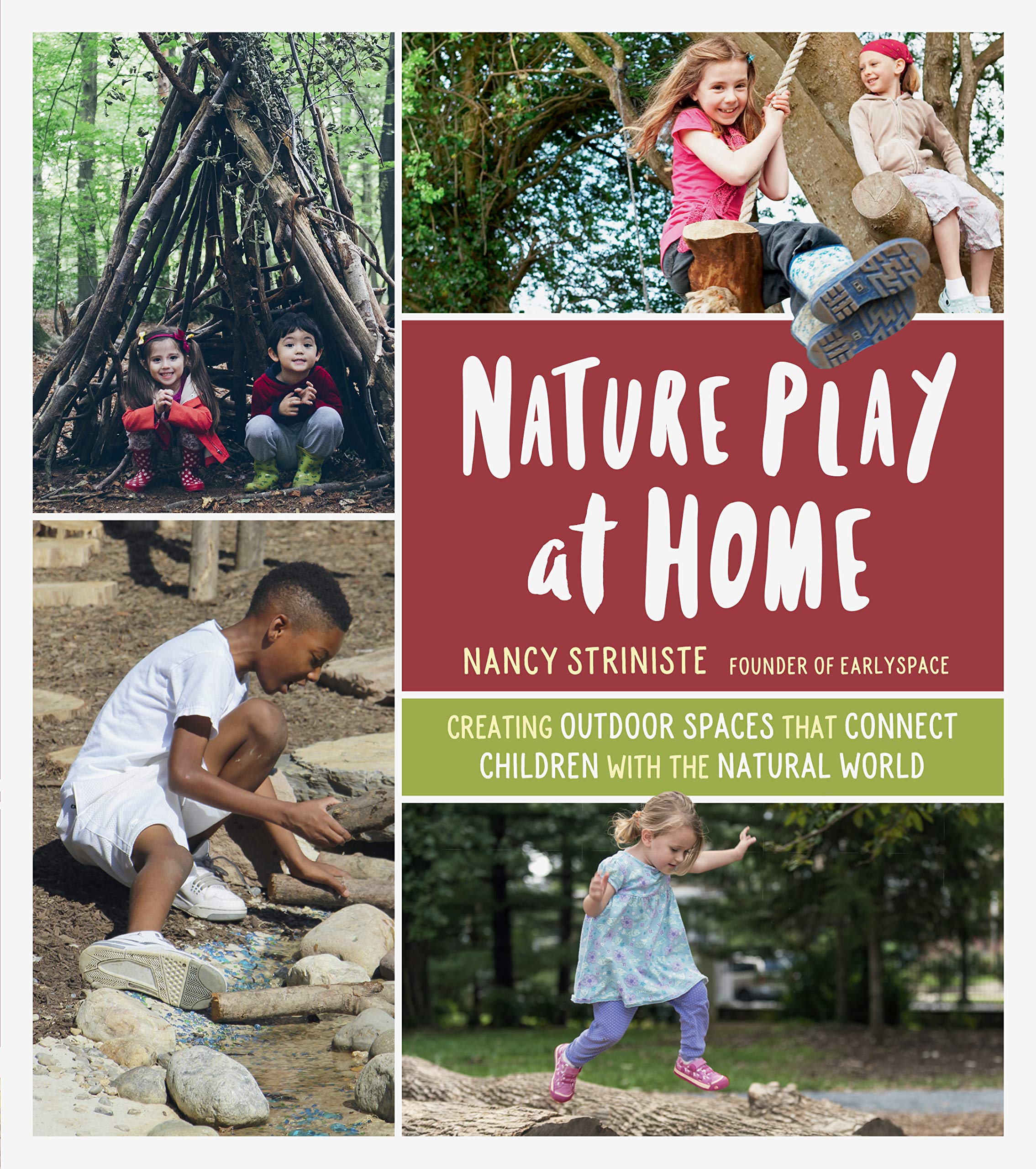
The National Wildlife Federation has created an incredible and comprehensive guide for families: Nature Play at Home, A Guide for Boosting Your Children's Healthy Development and Creativity. The guide explains the social-emotional, physical, and cognitive benefits of outdoor play and includes beautiful photographs and simple directions. Here are some examples of what you'll find inside:

1 Shovel level of difficulty 

"Loose Parts (natural and not) include almost any found object or play material that increases play and learning. To start, gather some of nature’s loose parts already present in your yard. Children’s creativity is driven by anything that can be manipulated, changed, or moved around. Rather than purchasing toys for your children play to with outdoors, consider recycling and reusing everyday objects and taking stock of what nature provides for free!"

Nature Play at Home: Creating Outdoor Spaces that Connect Children ...2-4 Shovels level of difficulty
"Adventure Pathways create opportunities for repeated exploration and adventure, even in relatively small yards. Pathways can be simple: a footpath around the edge of the site sneaking around trees and bushy plants. Complexity can be added with logs, stumps, rocks, stepping stones, and other obstacles to balance, jump or clamber around. A looped pathway is more enticing. To a child it feels like it leads to a secret place. In larger sites, other settings along the path increase the sense of adventure and mystery. Settings such as backyard habitat, gathering places, grass mazes or fairy villages work well along a pathway."

4 Shovels level of difficulty
"Vine Teepees are structures of six poles, six to eight feet long, made of bamboo, sturdy branches, or painted PVC. The poles are secured at the top and covered with climbing vines. Teepees create mysterious, natural, private, child-sized spaces."

Another very similar and fantastic resource is Nature Play at Home by Nancy Striniste. For more on loose parts, perfect any time of year, check out Loose Parts, Inspiring Play in Young Children by Lisa Daly and Miriam Beloglovsky.

Have a great summer!


Friday, May 22, 2020

Such a Busy Week!

Memorial Day, Bike Day, and Shavuot, Oh My!

Celebrate Memorial Day on Monday
  • Make an American flag cake (and explore shapes, counting, patterning, and fractions at the same time -- if you use strawberries instead of raspberries you can cut them in half or in quarters)

Join Us for Bike Day on Wednesday
  • Check your weekly email for all the details!

Celebrate Shavuot on Friday


Friday, May 15, 2020

STEAM Challenge - A House for the Three Little Pigs

This activity will keep you busy all week!

Read a variety of Three Little Pigs books. Ask your child how the books are the same and how they're different. Ask which one is their favorite and why. Act out the story together. Have them tell you the story in their own words. Write and illustrate a family version of the story together.

Take a walk around your neighborhood and notice all the different kinds of houses. What do all houses have in common? How are some houses different from other houses? When you get home, draw pictures of the houses you saw. Draw a picture of your own house. Draw a picture of your dream house.

Ask why the pigs' straw and stick houses blew down but their brick house didn't. 

Gather 
  • straws, skewers, craft sticks, toothpicks, pencils, crayons, wood pieces, sticks, coffee stirrers, leaves, paper cups, etc.
  • tape, binder clips, rubber bands, glue, paper clips, staplers, etc.
  • scissors
  • Legos, blocks, K'nex, etc.
Build different kinds of houses using different materials. Predict which ones will blow down (and why). Test out your theory by trying to blow the houses down! Use your breath, a paper fan, or an electric fan.

When the houses fall down, try re-building them so that they don't blow down the next time. Keep trying!

Remember, it's not about building a strong house the first time. It's about figuring out why some houses fell down and others didn't. What kinds of materials are strongest? Which design is sturdiest? 

It's also about overcoming frustration and realizing that we've learned something even when our experiment has failed. We learned what didn't work. (Thomas Edison usually gets credit for that quote.)

As always, the best questions to ask during this process are: Why do you think that happened? What would happen if . . .? 

Have fun!

From: Making and Tinkering with STEM, Solving Design Challenges with Young Children by Cate Heroman (NAEYC, 2017)


Friday, May 8, 2020

Staying Busy with Stuff You Have at Home

Literacy: Name Game
  • On index cards, write each letter of your child's name
  • Mix the cards up and have your child put them in order
  • Once they've mastered their first name, play with their last name, their middle name, and family members' names
Numeracy: Egg Carton Counting
  • Write the numbers 1-12 in the spaces in an empty egg carton
  • Give your child raisins, cheerios, or other small items
  • Have them fill the spaces with the correct number of items
Problem Solving: What Will Grow?
  • Talk with your children about how plants grow
  • See what they know and fill in the gaps in their understanding
  • Conduct an experiment to deepen their understanding
  • Fill cups with dirt
  • Plant orange and apple seeds, unpeeled garlic cloves, chunks of potatoes, beans, etc.
  • Also plant dried fruit, cereal, egg shells, cheese, etc.
  • Make predictions and see what happens! 
Motor: Hot Lava Game
  • Spread pillows or small towels around the floor
  • Have your child jump from pillow to pillow (or towel to towel)
  • Don't fall in the hot lava!
Arts and Crafts: Painting Without a Paintbrush
  • Paint (or print) with toothpicks, cotton balls, Q-tips, cut-up sponges, plastic spoons or forks, bubble wrap, yarn, magnetic letters, etc.
Music: Make a Shaker
  • Decorate an empty water bottle and fill it with beans, popcorn kernels, buttons, pony beads, etc.
  • Cut a paper plate in half and staple the edges together, decorate, and fill with same as above
Drama: Clean Out Your Closet AND Create a Dress-Up Corner
  • Your child will LOVE dressing up in your old skirts, scarves, dress shirts, jackets, ties, costume jewelry, hair accessories, and shoes and playing with your old briefcases, wallets, purses, keys, and cell phones
Social-Emotional: Plan a Party
  • Involve your child in planning a ZOOM party
  • Who to invite?
  • When to meet?
  • Where to meet? (everyone's backyard or kitchen, a nearby park?)
  • What to eat? (everyone makes a fruit salad? or pizza?)
  • What to sing/play/or talk about? What's the theme?
With thanks to The Preschooler's Busy Book by Trish Kuffner for the inspiration


Friday, April 24, 2020

Not All Screen Time is Created Equal

I've known that I wanted to write about screen time for awhile now, so I was very happy to see this article in this morning's New York Times. Catherine Price hits on all the points I'd wanted to make, and more.

Our notions of screen time have changed dramatically in the past six weeks, as have our notions about just about everything else. I've come to realize that not all screen time is created equal. There is a huge difference between spending time talking with grandparents and connecting with preschool friends on ZOOM and mindlessly playing video games. Watching a high quality television show together as a family can be a meaningful experience, whereas everyone staring at their own screen during dinner most certainly is not. Using the internet to find information or learn a new skill is not the same as watching YouTube videos all day.

Price explains this by talking about the 3 Cs: consumption, creation, and connection. "Once you’ve identified your screen time 'essentials,' it’s time to think about your leisure time (or what passes for it these days). Identify which of these 'C's feels good to you, and in what doses. Then brainstorm ways to do each both on- and off-screen. Bonus points if you ask yourself what kind of consumption, creation and connection makes you feel the best."

Bottom line: Don't worry too much about screen time right now. It's how you engage with the screen that matters more than how much time you spend doing it.

Go To Preschool/Kindergarten with ACPS every day

Go to Storytime with the Met every Thursday

Visit the Cincinnati Zoo

Visit the Monterey Bay Aquarium

Visit Mount Vernon

Have you found other good virtual tours or online experiences? Please share in the comments section below.

Monday, April 20, 2020

Follow Their Lead

Written a month ago (and sent to me a month ago by a colleague), this essay still resonates. And yes, even though we're only five weeks into this new normal, some of what Teacher Tom says might seem outdated by now. But the overall point he makes remains true: "Young children were built for this. Young children are the masters of learning from whatever life throws at them."

I've been thinking a lot lately about what we mean when we talk about education, and I've realized that we're all talking about different things. For some, education is strictly book learning: reading, 'riting, and 'rithmetic. For others, it's about learning how to be an important part of a family, a community, and a society. For most, it's somewhere in the vast in-between.

It's very easy to feel stressed right now. As this crisis evolves, we're given new opportunities to feel anxious almost every day. But I believe what Teacher Tom believes, and that's that our young children will come through the other end of this just fine, especially if we follow their lead. Let them show you the way; let them show you what they're ready to learn.

Eventually, I promise, they will show you that they're ready to learn their letters. But right now, in this moment, they might need to spend 30 minutes trying to figure out how to get a stuck toy out of a tree, and might literally throw everything they've got at it. Let them do it. Don't make them stop to do something else that you think is more important. Let them find their own solution to a real-life problem. Let them flex their problem solving muscles and practice those skills in a relevant and meaningful way.

And when they come to you later, a little lost and needing a little direction, know that so much of what we have at home and do at home can provide delightful and meaningful experiences for young children.

Wash the Dishes
  • Fill the sink with soapy water, a sponge, and non-breakables and ask your child to help you wash the dishes. (motor and social-emotional skills)
Do the Laundry
  • Ask your child to separate the lights from the darks, put the detergent into the machine and push the buttons, and match the socks and fold the dishtowels. (motor, language, problem-solving, and social-emotional skills)
Set the Table
  • Give your child the job of setting the table every day for every meal. Even if they're too young to carry plates, they can still put out the placemats, fold the napkins, and count the forks. (motor, numeracy, problem-solving, and social-emotional skills)

Tuesday, April 7, 2020

Getting Ready for Passover - Make Chocolate Matzah!

This chocolate matzah is truly addictive. You've been warned!

Children can easily help with all but the middle steps.
  • Preheat oven to 375.
  • Line two baking sheets with foil (to help with clean up) and then put parchment paper on top of that.
  • Break 5-6 matzahs into pieces and spread them out on the baking sheets, making sure not to overlap.
  • Melt two sticks of butter and one cup of firmly packed brown sugar in a medium-size pot on the stove on medium heat.
  • Stir constantly until the mixture comes to a boil (about 2-4 minutes). Allow to boil and stir constantly for another 3-4 minutes. You'll know it's done when the mixture pulls away from the pot a little bit.
  • VERY CAREFULLY pour the very hot mixture all over the matzah. Use a spatula to spread it around, making sure all matzah pieces are covered.
  • Put the matzah in the oven and immediately turn the temperature down to 350. Let the matzahs bake for about 15 minutes. Check every few minutes to make sure they aren't burning. If they're browning too quickly, reduce the temperature to 325.
  • Remove from oven and sprinkle with chocolate chips. Give them a minute to get all melty, then use a spatula to spread the chocolate around. You can also add chopped nuts, kosher salt, or sprinkles.
  • Put in the freezer to give everything a little time to firm up. Break the matzah into bite-size pieces. Store in the freezer.
  • Try not to eat it all at once!
This version of chocolate matzah comes from Marcy Goldman's A Treasury of Jewish Holiday Baking, found on Epicurious (online), 2010.

Monday, April 6, 2020

Getting Ready for Passover - Make Charoset!

Charoset is one of the traditional foods served at seder. It represents the bricks the Hebrew slaves were forced to make in Egypt.

In Ashkenazi communities, it's usually made with apples, nuts, and spices. In Sephardic communities, it's usually made with dried fruits.

This is super easy to make with children. Have fun!
  • Peel and chop three red apples
  • Chop a handful of walnuts
  • Add ½ tsp. ginger, ½ tsp. cinnamon, 1 ½ T sugar
  • Add 3 T grape juice
Mix well and refrigerate for a hour or two before eating.

Eat for breakfast all week with matzah and cream cheese. B'tayavon!

Friday, April 3, 2020

Our Community Garden

We had such plans for our gardens and grounds this spring! We wanted to build new garden beds, clean up the flower beds, and create a beautiful natural play space for the children around the climbing tree.

Last week, while on a walk that took me behind the synagogue, I saw the sadly neglected flower bed near the climbing tree play space. And I got an idea.

We're all taking walks and riding bikes and scooters these days. What if, when we went by the synagogue, we stopped for a few minutes to weed? I can prune the tree. And once the weeds are gone, I'll get some dirt. 

And then, maybe we can transplant a few flowers from our own yards, or pick up some annuals while at the grocery store, or even some herbs, and plant them in the bed. There doesn't have to be a real plan. I think a mishmash of sun loving perennials and annuals lovingly planted by our families during this time will be absolutely beautiful.

As our community garden grows, I'll take pictures and post them here.

Happy spring!

Thursday, April 2, 2020

Sensory Tub

Activity: Sensory Tub


  • Using materials you have at home, create a sensory tub
Materials
  • Large, flat bottomed plastic tub that fits on your table (an extra large Tupperware will do nicely)
  • We often use a mix of uncooked rice, beans, lentils, pasta, popcorn kernels, oats, etc.
  • If those are currently unavailable, try shredded paper, ribbons, cut-up straws, cotton balls, small toys like marbles, puff balls, magnetic letters, corks, bottle caps, aquarium rocks, etc., really anything that is small and scoop-able and pour-able
  • If you want a messy experience, try water (and ice cubes!), dirt, sand, or shaving cream
  • You can also order kinetic sand online
  • Scoops, cups, measuring spoons, bowls with and without lids, etc.
Questions and Prompts
  • How many scoops will it take to fill that bowl?
  • Can you make me a chocolate cake?
  • Help me clean up everything that fell on the floor!
Time
  • Ongoing
Skills Learned and Practiced
  • Social-Emotional - can be a very calming and soothing experience for some children
  • Language - vocabulary development, conversation skills
  • Cognitive - math and science concepts, open-ended exploration and discovery
  • Physical - learning to use all senses to take in information

Outdoor Magic

Early childhood educators have long known the   benefits of outdoor play . To name but a few, outdoor play improves physical and mental heal...