Tuesday, March 17, 2020

Writing Center, Dramatic Play, and Pen Pals

Activity: Writing Center (AKA school or office)
  • Turn a section of your dining room or family room into a writing center.
  • Encourage dramatic play such as school or office.
  • Older siblings can join in the fun, especially if playing school.
  • Children can work in their office while parents are teleworking in theirs.
Materials
  • Table and chairs
  • Scrap paper, envelopes, mailing labels - make good use of your junk mail!
  • Notebooks, folders, binders, sticky pads, business cards
  • Pens, markers, pencils
  • Scissors and tape
  • Staplers and hole punchers
  • White board or cork board
  • Old cell phones, computer keyboards, calculators, any other "gadgets"
Time
  • Ongoing
Extension: Pen Pals
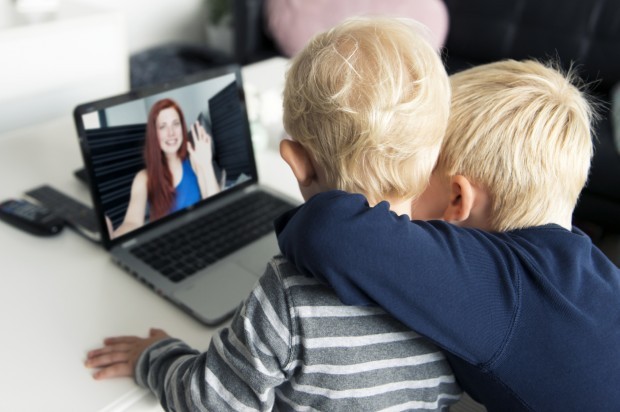
  • To maintain connections with family and friends, have your children write letters and draw pictures to drop in the mail. How exciting it will be to get a response!
  • Similarly, create an email account for your child (something anonymous like kittycat123) and have them send messages to family and friends. Check the email together at the same time every day to see if they've gotten a reply.
Skills Learned and Practiced
  • Social-Emotional - dramatic play teaches cooperation and creativity and writing to pen pals builds connections and/or strengthens relationships
  • Language - children will practice pre-reading and pre-writing skills and build vocabulary
  • Cognitive - this kind of dramatic play encourages planning and problem solving
  • Physical - all the fine motor activity helps strengthen the muscles in the hands
Personal Note
I still have vivid memories of playing office in my grandparents' house when I was 4 or 5 with supplies my grandfather would bring home from work. The notepads has his name on them! I answered the rotary phone, made appointments in a large spiral ledger, and used an antique adding machine in ways that seemed very important. It should come as no surprise that I played school as well. A lot. Activities like this can keep a child happy and busy and learning for days.

Thoughts or suggestions? Comment below!


Monday, March 16, 2020

Schedules and Routines

Image result for schedules clipartSchedules and routines help children feel safe and secure and can also help parents feel in control. In these next few weeks schedules and routines will help provide your family with a much needed sense of normalcy.

Sit down with your children to discuss your new daily routines. Involve them. Write the schedule out, find or draw pictures to go along with it, and post it in a central location in your house. Refer to it often. 

Below is a recommended generic schedule. Young children don't understand 10 am, but they do understand "after breakfast." Whatever schedule you end up creating, ideally it would contain all of these elements:


  • PLAY TIME - Unstructured play time is essential right now. Children still need the time and the freedom to explore on their own in their own way in their own time. Allow at least an hour for unstructured play time. 
  • ACTIVITY TIME - This is not "academic" time! Please don't feel as if you have to resort to worksheets or flashcards or online games to create a meaningful experience. Children still learn though play, even when they're at home in this unique situation. We will be offering you suggestions daily on this blog and there are an abundance of ideas to be found online right now.
  • SNACK and MEAL TIMES - Take advantage of these opportunities. Give your children responsibilities in the kitchen: snapping beans, chopping soft veggies with butter knives, mixing ingredients. Give them the silverware to dry and put away. Most importantly, sit down together at regular times to eat and talk and enjoy each other's company.
  • CHORE TIME - It's never too early to give your children chores! Young children can fold underwear and match socks, put their toys away, dust furniture, and help unload the dishwasher by putting the silverware away.
  • QUIET TIME - Everyone needs quiet time, which is not the same as nap time. Children can be expected to spend at least 30-45 minutes every day in their bedrooms or in a room close by you listening to music, looking at books, doing puzzles, or drawing/coloring. Check out PJ Library Radio. This is a great time to introduce audio books. 4 year-olds might even be ready for chapter books.
  • OUTSIDE TIME - Thank goodness it's spring time! Get outside for some fresh air and vitamin D. Pull weeds and plant flowers. Go for long walks. Explore your neighborhood. Check in on elderly neighbors.
  • SCREEN TIME - Yes, screen time. It's ok. Don't feel guilty. The American Academy of Pediatrics says up to one hour of high-quality screen time per day is appropriate for children ages 2-5. I'd say 90 minutes are ok in these circumstances.
  • GAME TIME - Bring out the board games! Ravensburger makes excellent board games. Or call One Two Kangaroo in Shirlington (703-845-9099). The proprietor always has spot-on recommendations, and he's staying open for as long as possible (while maintaining social distancing).
  • STORY TIME - Make sure you allow for time to just read with your children. Story time doesn't have to be saved for bedtime.

Friday, March 6, 2020

They Are All Esthers

Image result for clipart queen esther purimThe celebration of Purim seems to have been designed with young children in mind: cookies, costumes, parades, carnivals, goody bags, songs, and silliness. Yet, the story of Purim itself is decidedly child un-friendly. We read about gluttony, greed, misogyny, xenophobia, and attempted genocide. And don't forget the execution at the end. So what should we focus on when teaching this story to our children?

I used to ask my fourth and fifth graders to identify the 'big idea' in a story, and I used to think the 'big idea' in Megillat Esther is that one person really can make a difference. But this year I see a new 'big idea.'

King Achashverosh was willing to follow the suggestion of his evil adviser Haman and kill all the Jews in Persia until he learned that his beloved wife was Jewish.  In that moment, the Jews in his kingdom became less amorphous; they became real people. At least one Jew in his kingdom had a face, a mind, a personality. If Esther, a Jew, was a real person, then all the other nameless, faceless Jews must be real people, too, none of whom deserved to die because ONE Jew had refused to bow down to Haman.

In today's world, where increasingly it seems as if different groups, for different reasons, are trying to identify an 'us' and a 'them,' and to pit 'us' against 'them,' I think it's important to remember who 'them' are. They are all Esthers.
Originally published March 10, 2017

Friday, February 28, 2020

Technology: It's All About Relationships


Back in December I wrote that "it's all about relationships." It's a theme I'm hearing over and over, no matter the context. It seems that even technology is also all about relationships.

Image result for technology familiesWith a headline that read, "The Amish use tech differently than you think. We should emulate them," I knew I had to read the article.

"When a church member asks to use a new technology, the families discuss the idea and vote to accept or reject. The conversation centers on how a device will strengthen or weaken relationships within the community and within families. . . a family wanted to run propane gas pipes for lights to every room of their home instead of running them only to the kitchen and living room. (The Amish choose not to tap the electrical grid.) Church members discussed how the change would affect the family. If the family members could separate into bedrooms to read at night, instead of gathering in the living room, would their ties fray? Of course they would . . . I thought of a woman at my children’s school who said the disintegration of her family began the day her husband bought a TV for every kid’s bedroom. That was a while back. Today, millions of parents are unwittingly putting TVs in their children’s bedrooms, in the form of smartphones and laptops. And uneasiness about weakening family ties is widespread."


When do we introduce technology to our children? How do we regulate their use of technology? These aren't questions with easy answers. But maybe if we reframed the questions and thought about the impact of technology on our relationships, the answers wouldn't be so hard after all.

Friday, February 21, 2020

Yes, a Spoon Really Is a Pre-Writing Tool


Image result for spoon

Today, four teachers and I attended a workshop on teaching language and literacy in an emergent environment. We definitely do not start teaching writing skills by putting a pencil in a child's hand. Pre-writing activities start long before then. In fact, all fine and gross motor activities are pre-writing activities.

Writing involves motor control, spatial awareness, hand-eye coordination, and muscle strength, and big muscles must develop before small muscles. We develop big and small muscles by playing with blocks, painting, beading, weaving, molding clay, tearing, cutting, playing with Legos, cooking, and gardening. (Click here for more ideas.)

So . . . spoons? Yes. Tools are extensions of our arms and hands, and as such, holding a spoon or a fork is an introduction to holding a pencil. When you pack your child's lunch with foods they must eat with a spoon or fork, know that you're helping them on the path to literacy.

Friday, February 14, 2020

Preschooler's Pockets


Image result for preschooler pockets
A friend sent me this story last week. A photographer has documented what's in her preschooler's pocket at the end of every day, those "tiny magical objects" that are so important to him right now.

The photos reminded me of that saying: "The days are long but the years are short." It's exhausting being the parent of a young child, and it's easy to overlook what can and should be magical moments because they can be so fleeting and we are always so busy.

Looking at the photos, I was also reminded of all the delightfully odd pieces of "trash" I used to find in my son's pockets, or failed to find. Hearing the (surprisingly large) rocks tumble around in the dryer was not amusing then but it is now. 

I think the photographer's message is to savor the small moments now, because they will form the foundation of our memories later.

Check out Melissa Kaseman's photos here.

Friday, February 7, 2020

Picky Eaters 101


Image result for seven species

For snack on Monday, in honor of Tu B'Shevat, we'll serve the children the Seven Species, or seven special foods native to Israel that are mentioned in the Bible: wheat (pretzels), barley (as long as the store has what I need!), olives, pomegranates, figs, dates, and grapes (raisins). Eaten primarily on Shavuot, they're also sometimes eaten on Tu B'Shevat and Sukkot.


Are all the children going to enjoy all these foods? No. Is that ok? Absolutely. If some children try these foods but don't like them, at least they'll have had the experience of trying something new. If they don't want to try the foods at all, they'll have lunch 90 minutes later and all will be well. And if some children try these new foods and do like them, all the better.

I know from personal experience how worried, frustrated, and angry we can get when our children don't eat what we think they need to eat to be healthy and strong. At some point the anger turns to resignation. And then to anxiety. And then to the worst parent feeling of all: guilt.

There are no easy answers when it comes to how to feed a picky eater. When you're sure your child is starving to death because they've only eaten granola bars for a week, hearing a well-meaning friend say, "Don't worry. She'll eat when she's hungry," doesn't really help.

Having said that, here are some good, common-sense strategies from the Mayo Clinic about teaching your child good and healthy food habits. One promise I can make: it will get better. It always does.

Outdoor Magic

Early childhood educators have long known the   benefits of outdoor play . To name but a few, outdoor play improves physical and mental heal...